.avif)
.avif)
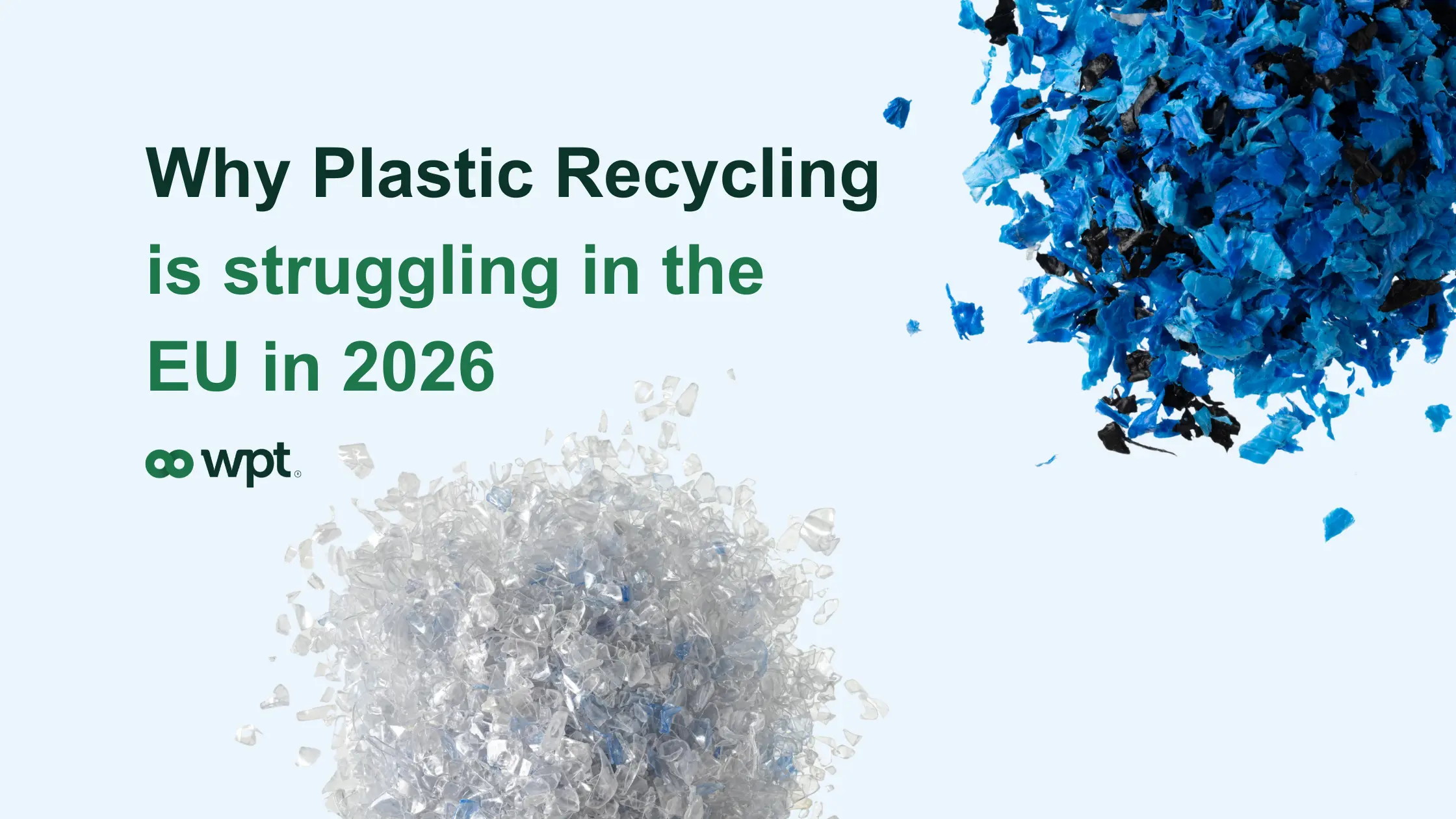
By 2026, plastic recycling in the European Union is facing structural problems. Plastic waste levels remain high, recycling rates have stopped improving, and parts of the recycling industry are struggling to stay economically viable.
Across the EU, people generate roughly 35 kilograms of plastic packaging waste per person each year, but only about 40–42% of that material is recycled. While this represents progress compared to a decade ago, improvement has been slow, and in many countries recycling rates remain well below EU targets. Only a small number of Member States are currently on track to meet the 55% plastic packaging recycling target set for 2030.
At the same time, recycling capacity in Europe has come under pressure. Recyclers face high operating costs and weak demand for recycled plastic, particularly when virgin plastic is cheaper and more consistent in quality.
As a result, some recycling plants have reduced output or closed, making it harder for municipalities to find outlets for sorted plastic waste.
Policy changes in 2026 will increase that pressure. New EU packaging rules will start to apply in August, placing stricter requirements on packaging design and waste reduction. Later in the year, exports of plastic waste to non-OECD countries will be banned.
These measures are intended to improve environmental outcomes, but they also mean that more plastic waste will have to be managed within Europe’s existing recycling and recovery systems.
Recycling only works if manufacturers consistently use recycled plastic in new products. Without stable end-markets, collecting more plastic does not automatically lead to more recycling, and material that cannot be sold is often diverted to incineration instead.
In that sense, the plastic recycling problem in 2026 is a systems issue. Without stronger demand for recycled plastics, simpler and more recyclable packaging design, and sufficient domestic processing capacity, higher targets alone are unlikely to deliver meaningful circularity.

.webp)
.avif)

As regulations tighten on single-use plastics, how will this effect the demand for secondary raw materials?

We work closely with various partners in industry, trade and local governments. Focusing on the purchase and sale of secondary raw materials.


.jpg)
.png)

.avif)





.png)